
Screenshot 2026-06-21 at 8.51.47%E2%80%AFPM.png

Practical Nutrition for Ultrarunners

Ultrarunning places enormous demands on the body. From long training blocks to race-day fueling, nutrition plays a critical role in performance, recovery, and overall health. Yet despite its importance, many ultrarunners still struggle with fueling strategies, hydration, and gastrointestinal (GI) distress during races.

The good news? Nutrition is one of the most trainable aspects of endurance performance. Dialing in your fueling strategy can often lead to some of the biggest and most immediate performance gains.

Why Nutrition Matters in Ultrarunning

Most ultrarunners will experience GI distress at some point during training or racing, and many report that these symptoms negatively impact their performance. GI issues and failure to fuel properly are among the leading causes of DNFs.

At the same time, ultramarathon training is extremely demanding on the body.

High training loads can:

  • Increase stress hormones

  • Disrupt sleep

  • Suppress immune function

  • Impact nervous system recovery

  • Increase overall fatigue

Proper nutrition helps mitigate these stressors while supporting training adaptations, performance, and recovery.

The Goal of a Nutrition Strategy

  • Support the physical stress of training

  • Optimize training adaptations

  • Maximize race performance

  • Reduce fatigue and GI distress

  • Improve recovery after training and racing

Most importantly: have a plan! Be prepared, organized, and ideally self-reliant on race day. Backup plans are equally important when things do not go perfectly…

Reminder: Control the controllables and pivot when needed.

Common Nutrition Challenges

Fueling needs vary based on:

  • Environment and temperature

  • Altitude

  • Race distance

  • Intensity

  • Food availability

  • Individual tolerance and preferences

Athletes also bring bias from previous race experiences, whether positive or negative. One difficult fueling experience can influence future choices, even when conditions are completely different.

It is also important to distinguish between bonking and GI distress. Sometimes athletes underfuel, while other times they overconsume or consume foods their gut cannot tolerate.

As the saying goes: “You can’t outrun a bad diet.”

Daily Nutrition for Ultrarunners

Energy Balance:

Ultrarunners have high caloric demands, especially during peak training blocks.

Meeting daily energy needs is essential for:

  • Supporting recovery

  • Maintaining immune function

  • Preventing excessive fatigue

  • Optimizing performance

Daily nutritional needs are influenced by:

  • Fitness level

  • Training intensity and duration

  • Sex

  • Basal metabolic rate (BMR)

  • Body composition

  • Environmental conditions

A general macronutrient guideline for endurance athletes is:

  • Carbohydrates: 60%

  • Protein: 15%

  • Fat: 25%

Untitled design (1).png

Carbohydrates

Carbohydrates are the primary fuel source for endurance performance.

Benefits of adequate carbohydrate intake include:

  • Improved exercise capacity

  • Better endurance performance

  • Reduced fatigue

  • Improved recovery

Not all carbohydrates are equal, and timing matters.

Some athletes experience exercise-induced hypoglycemia when consuming large amounts of simple carbohydrates too close to a run. For this reason, some runners may benefit from avoiding large carbohydrate-heavy meals within 90 minutes of training.

Using mixed carbohydrate sources can also improve carbohydrate absorption and gastric emptying, helping athletes tolerate higher fueling rates during long efforts.

Protein

Protein supports:

  • Muscle repair and recovery

  • Maintenance of lean muscle mass

  • Reduced muscle damage from training

Most endurance athletes benefit from consuming approximately:

  • 1.6–2.0 grams of protein per kilogram of body weight per day

Protein supplements can be a convenient option when meeting daily intake goals is difficult.

Fat

Fat plays an important role in overall energy balance and satiety. While carbohydrates remain the primary fuel source during higher-intensity exercise, healthy fats support long-term energy needs and help athletes feel satisfied between meals.

Untitled design.png

Hydration

Hydration is one of the most important, and often misunderstood, aspects of ultrarunning nutrition.

Even a 2% loss in body fluid can negatively impact performance.

Hydration supports:

  • Core temperature regulation

  • Digestion and nutrient absorption

  • Blood volume and circulation

  • Removal of metabolic waste products

Dehydration decreases plasma volume, which can increase heart rate and perceived effort.

Day-to-Day Hydration

For daily hydration, athletes should generally drink to thirst. Urine color can also be a helpful guide:

  • Pale straw color = well hydrated

  • Dark urine = likely under-hydrated

Athletes may also benefit from sweat testing tools such as:

  • Sweat tests

  • Gatorade sweat patches

  • Nix hydration sensors

Post-Exercise Hydration

After training or racing, prioritize slow intake of isotonic fluids to support recovery and rehydration.

Pre-Race Nutrition

In the days leading into a race, athletes should focus on:

  • Consistent hydration

  • Quality sleep

  • Managing stress

  • Eating familiar foods

Carb Loading

Carbohydrate loading is typically performed during the final 48 hours before a race.

General recommendations:

  • 8–10 g/kg/day of carbohydrates

  • Focus on easily digestible foods

  • Reduce excessive fiber intake

  • Eat to comfort

Avoid trying new foods immediately before racing. Whenever possible, prepare your own pre-race meals so you know exactly what works for your body.

Screenshot 2026-06-21 at 9.13.50%E2%80%AFPM.png

Race-Day Fueling

Successful ultrarunning performance is closely tied to consuming adequate calories, fluids, and electrolytes. A simple rule during races:

Eating, drinking, slowing down, and calming down are often the solution to many race-day problems.

Before the Start:

  • Eat breakfast at least 2 hours before the race

  • Aim for 1,000+ calories depending on race length and individual needs

  • Begin fueling within the first 30 minutes of racing

During the Race:

Athletes should:

  • Know aid station locations and distances

  • Be self-reliant when possible

  • Have backup fueling options

General fueling recommendations:

  • 250–400 calories per hour

  • Approximately 70–80% of calories from carbohydrates

As race duration increases, athletes often tolerate and benefit from incorporating more fat, protein, and calories.

Variety also matters. During ultra races, taste fatigue is common. Athletes should practice with:

  • Sweet foods

  • Savory foods

  • Bland foods

  • Real foods

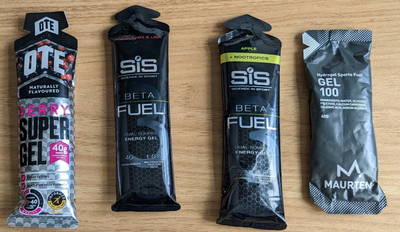
  • Engineered sports nutrition products

It is helpful to have 3–5 reliable “go-to” foods that consistently work well during long efforts.

Electrolytes and Sodium

Sodium is the primary electrolyte lost through sweat, and sweat sodium concentration differs significantly from person to person.

General recommendations:

  • Approximately 600–800 mg sodium per liter of fluid

However, more sodium is not always the answer.

Exercise-Induced Hyponatremia

Hyponatremia occurs when blood sodium levels become dangerously diluted. Importantly, exercise-induced hyponatremia is more commonly caused by overdrinking than by inadequate sodium intake.

Dehydrated with Normal Sodium Signs:

  • Thirst

  • Weight loss

  • Dark urine

  • Reduced urination

Response:

  • Drink fluids

Overhydrated with Normal Sodium Signs:

  • Sloshy stomach

  • Puffy hands

  • Frequent urination

Response:

  • Reduce fluid intake temporarily

Minimizing GI Distress

GI distress is one of the most common performance limiters in ultra-running.

Common contributors include:

  • Overconsumption of concentrated carbohydrate solutions

  • Dehydration

  • Heat stress

  • Reduced blood flow to the gut

  • Poor overall nutrition planning

  • Consuming too much volume too quickly

Strategies to reduce GI distress:

  • Start fueling early

  • Take small, consistent bites and sips

  • Use mixed carbohydrate sources

  • Practice race nutrition during training

  • Avoid overloading the gut all at once

This process is often referred to as “training the gut.”

Untitled design (2).png

Post-Race Recovery

Priorities include:

  • Isotonic rehydration

  • Carbohydrate intake

  • Protein intake

  • Rest and sleep

A carbohydrate and protein-rich snack or meal shortly after exercise can significantly improve recovery.

Supplements and Performance Aids

Athletes should consider baseline lab work before supplementing aggressively.

Caffeine may:

  • Improve focus and concentration

  • Improve exercise performance

  • Enhance muscle contractions

More is not better. Excessive caffeine intake may increase:

  • GI distress

  • Anxiety

  • Headaches

  • Elevated heart rate

Probiotics may help reduce GI symptoms in some athletes. Vitamin and Mineral supplements may be beneficial if deficiencies are present, particularly for iron, magnesium, zinc, calcium, and sodium.

Frequent use of NSAIDs during races can increase the risk of:

  • GI distress

  • Kidney damage

  • Exercise-induced hyponatremia

CoQ10 may:

  • Support ATP production

  • Reduce oxidative stress

Creatine may support:

  • Strength

  • Recovery

  • Cognitive performance

Magnesium supports hundreds of physiological processes and plays an important role in:

  • Muscle recovery

  • Nervous system function

  • Energy production

Prolonged exercise increases amino acid oxidation. Supplementation may help:

  • Improve muscle repair

  • Reduce inflammation

  • Support immune function

Final Thoughts

Ultra-running nutrition is highly individual, but preparation and consistency go a long way.

Training your gut, practicing hydration strategies, and developing a reliable fueling plan can significantly improve performance and reduce the likelihood of GI distress or race-day setbacks.

The goal is not perfection, it is preparation.

The better prepared you are nutritionally, the better equipped your body will be to handle the demands of training, racing, and recovery for years to come.

- Boundless Coach and Physician, Dr. Scott Jordan.

June 21, 2026