
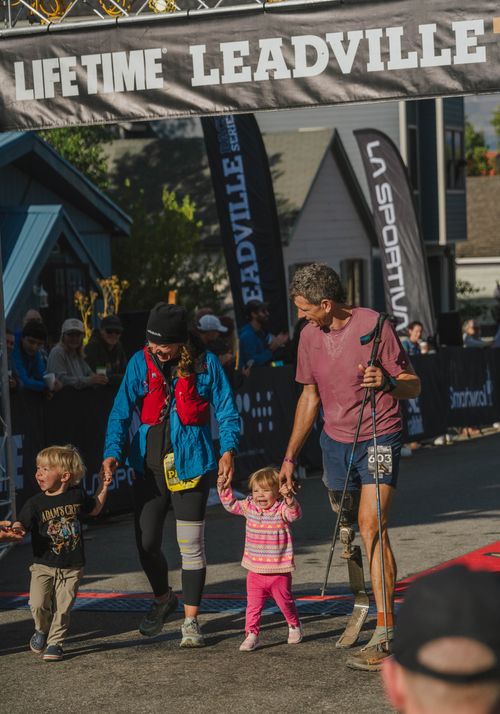
You set the goal, you find the race, you click “Register”, and you think, “All that’s between me and this goal is a boat load of training and hard work.” Except, far too often, I’ve noticed it’s easy to forget that there will be a lot of re-prioritizing and life-shifting that needs to occur to reach that goal. And, when a life event or life stress gets in the way, that’s a different challenge entirely.
Let’s talk about your priorities when planning for a race, like a 100 miler:
· Your first priority is to map out how much time it will take to train and dedicate to the training process. This doesn’t just involve how much of your weekdays and weekends are spend running- this is figuring out when you’re going to study your fueling plan, track progress, assess recovery, and plan your race travel. Where will you be spending money on gear? You want to be the most set up for success as you can.
This would be a good time to create a list of your doctors and physical therapists you might use during your training. Make sure you have a close enough relationship with them that you can set up an appointment and get immediate help if something comes up.
· Your second priority is to start the conversation with people in your life that may be affected and integrated into your training process, such as your family. You want to get your community on board. Feeling supported by those you love makes a huge difference in your training experience and keeps you more likely to show up every day to train.
At this point, you have all the facts and details of how much time it will take, and can share that. But remember, you want input, because it takes a team of support to make a race come together. With curiosity and care, begin the conversation. “On Tuesdays and Thursdays when I’m training before work, are you able to handle farm chores? In return, what can I do to help out and make up for your sacrifice?” Come up with a plan so that nothing feels like a surprise during your training block.
You may want to let your friends know, too. “I won’t be able to make game nights on Wednesdays for the next 4 months, since I’m training for this big race, but I’d love to have a phone call catch up once a month to see how you’re all doing!” At the end of your training block, you won’t feel like you left your friends in the dark, and can more likely pick up where you left off.
Don’t forget to thank your friends and family for their support, and ask, in return, what they need from you to continue supporting you.
· Now it’s time to actually train. You’re planning out long trail runs, you’re making the post-workout protein-and-carb smoothies, you’re doing extra laundry. You’re in it.
Two months into your training block, something major happens- you are offered a big promotion at work. The first couple months will involve a lot of late nights transitioning roles, doing double work, until they can get a replacement hired in your old position. You understand this will affect your training, weigh the options, and decide it is worth it to take the promotion.
You have a good base built and have started increasing volume during your training block, but the promotion and late nights start taking a toll. You feel fatigued every morning when you wake up, and don’t have the energy to complete runs. After a month, it’s feeling unreasonable to continue training for a race that is quickly approaching.
What do you do when you reach this hurdle?
This is a highly individual choice, but a coach can help you weigh the options. At the end of the day, signing up for a race is what I call an “extra” in life. It means we have the privilege to dedicate “extra” time to a big goal. So, I always remind my athletes of that. Yes, you spent a lot of money on the registration and potentially, travel, but at the end of the day, your well-being and self-care as a human comes first.
With self-care as a priority, you do have options, and none of them is the “right” option:
1. You choose to entirely dedicate those months to focusing on the work and promotion. After all, the financial stability and flexibility of the job is what allows you to travel and choose these races. You know the 100 mile distance will always be there, and you choose to delay your 100 miler goal.
2. You bump down your race distance to a 50km- lucky you, the race offers other distances! You realize you can commit to training to a shorter distance. Training every day won’t be as involved and take as much time and energy.
3. This specific 100 miler is incredibly important to you, so you sit down with your family and with your supervisor at work, and explain why it means so much. As a team, you are able to shift around the workload so you can get back to training and show up the best you are able on race.
The same type of consideration applies to something like an injury. Is it worth it to train every day when it hurts? The distance (and likely, the race) will always be there, but what kind of training experience do you want for yourself? Do you want to show up exhausted every day, unmotivated for the next workout, or do you want to feel rested, recovered, and balanced?
Remember, you’re a human first.
A personal Boundless story:
One of my athletes, Brad Mitchell, is currently training in the off-season before committing to a race. Brad is a professor and business owner in North Carolina, running a chain of bakeries across the state, and passionate endurance runner. Brad began working with me in February with the goal of completing a 100 miler in late fall. As we all know, other life priorities sometimes clash with our training goals. We’ve all been there.
Brad needed to focus on a major project this summer- opening a new bakery as part of his chain. With the race approaching just a few months away, the training schedule didn’t seem feasible anymore with his new workload. Brad and I worked together to reorganize his daily schedule and overall plan to more slowly integrate 100 miler training, with a 100 miler in mind for next year.
Now, with a greater runway, Brad is feeling more balanced and has been able to train with less stress. It simply took a couple conversations with me to understand the real need, which was to change the timeline of his next goal. At Boundless, we see our athletes as complete human beings- life stress is a big factor when it comes to training for something as intensive as a 100 miler. Instead of giving up and abandoning the goal, we can help reframe the goal and reconnect with the desire behind it. It’s hard to train for something when it feels stressful, rather than exciting.
I am so proud of Brad for having that conversation with me. It’s one of the toughest realizations to come to and toughest decisions to make. This is probably one of my greatest “wins” as a coach, to work through this hurdle with Brad.
Things to remember when you hit a hurdle:
· You’re a human first. Self care and recovery should be the standard when training for a race. You can’t perform without it.
· The tough decision upfront has endless positive impacts later
· Involve your community in your decisions. Life priorities may shift, but you’ll stay close with the people you love, which is equally important as training
· You are the one designing your training and race experience. If you’re injured, exhausted, or not able to show up to train, it’s worth re-evaluating your experience and coming back to it when you’re in a better place. The distance will always be there.
· Your coach is more than someone designing a training plan- they’re a real human that can help you weigh options to help you succeed as both a human and athlete.
-Colleen Miracle, Boundless Coach
September 25, 2026