
“Just three minutes until you reach your crew. You got this. Two more minutes. Look! You can see the crew vehicles lining the road up ahead. Just keep moving forward. Final minute. Breathe. Relax. Great job. You’re almost there.”
These are just a few of the encouraging words I say to myself during the final minutes of a sauna session.
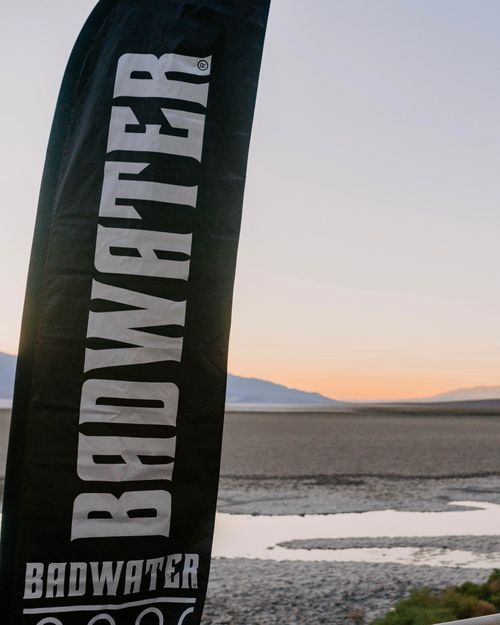
Obviously, sitting there in a 190 degree Finnish-style dry sauna, there is no crew vehicle just ahead. But I’m struggling to get through my second set in the sweltering heat and I need to practice my self-talk. Envisioning my upcoming race in this way gets me out of my head. And I need to practice because the mental test I’m signed up for is the “World’s Toughest Footrace”: the fabled Badwater 135.
There exists a wealth of solidly researched and well-written articles on the subject of heat training for endurance events. Jason Koop’s article on the 90% finisher rate among Badwater 135 participants is excellent and presents compelling data on optimizing heat adaptations. The National Library of Medicine has a very well-researched and extensive study for those who enjoy digging into the science
One of my favorite resources, though, is Cliff Pittman's article in Ultrarunning Magazine. In it, he makes a simple but important point: fitness must take precedence over every other training protocol, including heat acclimation.
It’s true that the adaptations needed for heat training are best gained through a well-planned protocol. You should complete your running and strength training workouts in the best conditions possible to receive the optimal cardiovascular and muscular responses. But anyone who has spent time training for endurance events knows that the mind is just as important as the body. It, too, must be stressed if it's going to become stronger.
I have yet to run Badwater 135, and perhaps I’ll write an epilogue to this post once I do. But I have finished a whole host of other races, including five Leadville Trail 100 runs. My philosophy for Leadville has always mirrored Pittman's advice: prioritize fitness above everything else, even altitude acclimation. Still, these types of races are guaranteed to do one thing, make you question your ability. And I believe it’s best to engage with those same questions in training.
What am I driving at here? The research says that optimal heat training is best done in controlled environments separate from your workouts. This both maintains the integrity of your workouts and creates the largest adaptations for your body.
But the mind is weird. It also needs to be stressed. It needs to experience discomfort while juggling competing demands.
For me, that means intentionally spending time wondering whether I have what it takes. And then I want to combat that with self-talk. This doesn’t mean removing all doubt. Rather, it means asking doubt to run alongside me. This is how I prepare.
As you engage with the last few weeks of your training for your big event, you’re probably shifting toward race specificity. I encourage you to start getting race specific with your mental training as well. Survey the course, even if it’s only on paper. Where during the race are you going to have the strongest doubts? When will the voices in your head be the loudest? When will they be quiet, subtle, and dangerously convincing?
Now think about how you’re going to speak to those doubts.
“The crew vehicle is just ahead. Keep running. Good job. Take some nutrition. Nice work. Now sip some water. You’re doing great. This is hard. This is why you do this. You’ve got this, Ben. You’ve got this.”
-Coach Ben Dicke
July 27, 2026